

Nutrizen Foods India
Food Processing & Dehydrated Food Manufacturing • Wholesale & Retail POSDigitizing Dehydrated Vegetable Powder & Flakes Manufacturing with Uttercode ERP
Discover how Nutrizen Foods India integrated its entire operations — connecting raw material inward, batch-level lab test reports, recipe-based manufacturing, centralized inventory, wholesale quantity slab pricing, and high-speed retail store POS into one unified system.
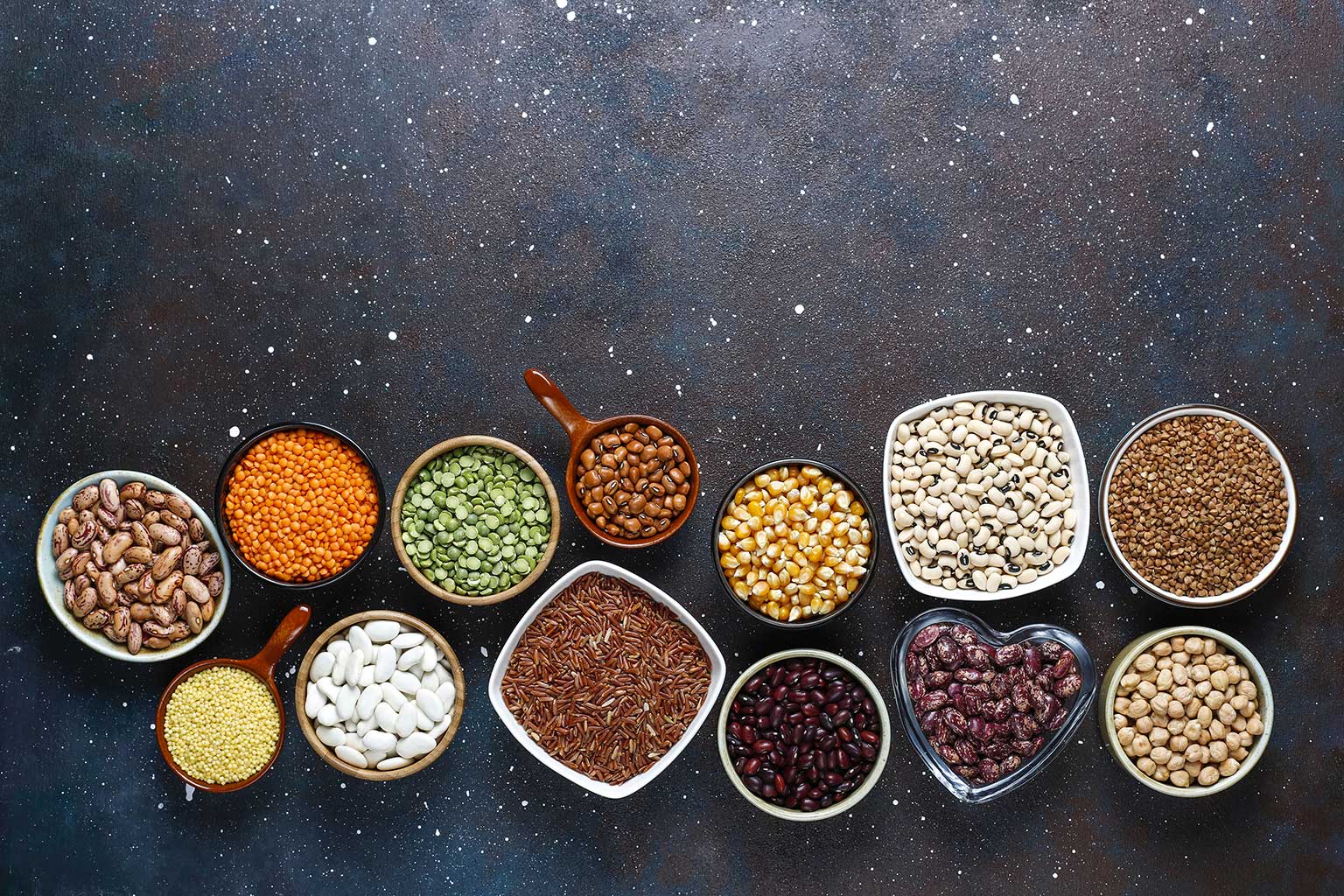
From Raw Material to Retail
Manufacturing, Lab Quality, Wholesale Slabs & POS1. Client Overview
Nutrizen Foods IndiaNutrizen Foods India operates in the food-processing sector, specializing in premium dehydrated vegetable powders and flakes (such as onion, garlic, tomato, and green chili).
Dehydrated Food Processing & Multi-Channel Distribution
The business model combines manufacturing with wholesale and retail sales, creating the critical operational need to manage multiple types of commercial transactions while maintaining absolute control over raw materials, production batches, quality documentation, and finished-product inventory.
Dehydrated food manufacturing is a sensitive and exacting process requiring meticulous management of:
- Raw materials & incoming material quality
- Batch numbers & manufacturing dates
- Production quantities & material consumption
- Finished batches & lab test reports
- Expiry / shelf-life information
- Wholesale pricing & quantity-based slab rates
- Customer-specific or quantity-based contract rates
- Rapid retail counter sales via store POS
Nutrizen Foods India therefore required far more than a basic accounting or billing software. The core mandate was for a connected ERP system covering the complete journey from Raw Material Inward → Quality Documentation → Production → Finished Goods → Wholesale & Retail Sales.
2. The Business Challenge
The business operates across two completely different sales environments that simultaneously draw from the exact same manufacturing inventory.
Wholesale Channel
Wholesale buyers purchase vegetable flakes and powders in bulk quantities (e.g. 50 kg to 5,000+ kg). They require quantity-based slab rates where per-kilogram pricing adjusts dynamically depending on order volume and customer tier.
Retail Store POS
Retail walk-in customers demand an ultra-fast, barcode-enabled counter checkout where products in retail pack sizes (100g, 250g, 1kg) can be scanned, quantities entered, and bills generated within seconds.
At the same time, both sales channels depend on the same inventory. Disconnecting them would cause stock mismatches, overselling, or double-counting:
                 MANUFACTURING
                      │
                      ↓
                FINISHED STOCK
                      │
             ┌────────┴────────┐
             ↓                 ↓
         WHOLESALE          RETAIL POS
             │                 │
        Slab Pricing       Retail Pricing
             │                 │
             └────────┬────────┘
                      ↓
                 STOCK UPDATE
3. The Manufacturing Requirement
Nutrizen Foods India's manufacturing process required a structured connection between raw materials, quality inspections, lab test certificates, and finished products.
RM Requirement
PlanningRM Inward
Gate ReceiptBatch / Lot
ID AssignmentQuality Check
Lab SampleLab Test Report
Attached PDFMaterial Approved
Release GateProduction
BOM RecipeFinished Batch
FG InventoryRaw Material Requirement → Raw Material Inward → Batch / Lot → Quality Inspection ↓ Inventory ← Finished Product ← Production Batch ← BOM / Recipe ← Production ← Approved Material ← Lab Test Report
4. Uttercode ERP Solution
Uttercode ERP was implemented as a unified platform synchronizing raw materials, production batches, quality reports, multi-channel pricing, and central inventory.
                     NUTRIZEN FOODS INDIA
                              │
              ┌───────────────┼───────────────┐
              ↓               ↓               ↓
        RAW MATERIAL       PRODUCTION        SALES
              │               │               │
              ↓               ↓        ┌──────┴──────┐
           INWARD             BOM      ↓             ↓
              │               │    WHOLESALE      RETAIL POS
              ↓               ↓       │             │
         LAB TEST          BATCH      │        SLAB / RETAIL
         REPORT           PRODUCTION  │          PRICING
              │               │       │             │
              └───────────────┼───────┴─────────────┘
                              ↓
                          INVENTORY
                              ↓
                           REPORTS
5. Raw Material Inward
The Manufacturing Journey Starts with Raw Material
Raw materials entering the factory (fresh onions, garlic bulbs, tomatoes, carrots, processing aids, packaging) are formally recorded through the Raw Material Inward module.
Objective: Establish an immutable digital record of what material was received, in what condition, and from whom.
6. Raw Material Batch Management
Foundation for Food Traceability
Batch management is non-negotiable in food processing. Uttercode ERP binds every incoming quantity to a unique Batch / Lot Number, linking supplier pedigree directly to consumption.
Raw Material → Supplier → Inward → Batch / Lot → Quality Test → Production Consumption
This strict linkage ensures that if any vegetable batch exhibits moisture variance, pesticide residues, or sensory defects, the ERP pinpoints the supplier and affected batches instantaneously.
7, 8 & 9. Quality Documentation & Lab Test Attachment
Establishing an unbreakable control gate between incoming raw material and manufacturing.
7. Lab Test Report Attachment
Instead of storing certificates in emails or loose desktop folders, PDF lab reports are attached directly to the ERP inward batch record.
8. Quality Documentation
Configurable test parameters ensure compliance with FSSAI and client food-safety criteria:
- • Moisture % & Ash content
- • Total plate count & Yeast/Mold
- • Color & Granulation index
- • Foreign matter inspection
- • Testing laboratory & Date
- • Quality officer approval
9. Material Approval Gate
Unapproved raw materials cannot be consumed in production batches:
REJECTED / HOLD → Quarantined
Prevents substandard or contaminated produce from ever reaching the dehydration dryers.
                    RAW MATERIAL
                         │
                         ↓
                       INWARD
                         │
                         ↓
                   QUALITY TEST
                         │
                ┌────────┴────────┐
                ↓                 ↓
             APPROVED          REJECTED / HOLD
                │
                ↓
             PRODUCTION
10 to 13. BOM-Based Batch Production & Traceability
Dehydrated vegetable processing requires precise recipes, yield standards, and unbroken batch linkage.
10. Production Management
Production is scheduled against planned finished product demand, evaluating raw vegetable availability, drying capacity, and pulverizing schedules.
Production Requirement → Production Plan → Material Availability
                                                    ↓
Finished Product ← Processing ← Consumption ← Production Batch
11. BOM / Recipe-Based Production
Uttercode ERP maintains multi-level Bills of Materials (BOM) specifying standard input-to-output ratios (e.g. 10 kg fresh onions → 1 kg dehydrated flakes).
12. Batch Production Records
Every manufacturing cycle generates an immutable batch record capturing:
13. RM to FG Batch Traceability
Establishes a bi-directional traceable connection: trace forward from raw vegetables to retail packets, or trace backward from customer complaint to farmer inward lot.
RAW MATERIAL (Batch RM-001)
     ↓
Quality / Lab Report
     ↓
Production Batch (PB-001)
     ↓
Finished Product
     ↓
Finished Batch (FG-001)
14. Material Consumption & Variance
Uttercode ERP tracks planned consumption versus actual usage on every drying and pulverizing cycle, revealing exact material yield variances:
BOM Requirement VS Actual Consumption
                ↓
          Variance Analysis
Highlights high-moisture vegetable lots that burn up extra weight, enabling data-driven supplier evaluations.
15. Production Wastage & Yield
Food dehydration involves peeling, trimming, drying shrinkage, and powder fines loss. Uttercode ERP categorizes every gram:
16 & 17. Finished Goods & Batch-Based Stock
Moving beyond flat stock quantities to batch-contextual food inventory.
16. Finished Goods Inventory
Finished goods transferred from production carry full manufacturing pedigree into warehouse bins:
- Product & SKU: Dehydrated Garlic Flakes / Powder
- Batch Number: Linked to production order and RM lots
- Production Date: Date of final drying/packing
- Expiry & Best-Before: Automatic shelf-life tracking
- Warehouse & Bin: Segregated wholesale racks vs retail store shelf
17. Batch-Based Finished Stock Visibility
Instead of simply seeing "Dehydrated Onion Powder: 1,000 Kg", warehouse and sales personnel see exact batch composition:
Dehydrated Onion Powder

Batch A (Exp: Dec 2026) → 400 Kg
Batch B (Exp: Jan 2027) → 350 Kg
Batch C (Exp: Mar 2027) → 250 Kg

Total Available        → 1,000 Kg
18, 19 & 20. Wholesale Sales & Quantity Slab Rate Pricing
Automating high-volume commercial pricing without error-prone manual calculations or price sheets.
18. Wholesale Sales
Manages large B2B supply chains, bulk contracts, batch allocation, dispatch manifests, credit limits, and sales history.
19. Quantity-Based Slab Rate System
When sales staff enter an order quantity, the ERP automatically checks the product's quantity slab and applies the correct tiered wholesale rate:
| Order Quantity Slab | Applicable Wholesale Rate (₹) | Pricing Rule Applied |
|---|---|---|
| 1 – 10 Kg | ₹XXX / Kg | Standard Base Rate |
| 11 – 50 Kg | ₹XXX / Kg | Tier 1 Volume Discount |
| 51 – 100 Kg | ₹XXX / Kg | Tier 2 Commercial Slab |
| 101 – 500 Kg (Example) | ₹XXX / Kg | Triggered for 125 Kg Order |
| 500+ Kg | ₹XXX / Kg | Bulk Distributor Rate |
Customer Requirement → Quantity = 125 Kg → Slab Calculation (101–500 Kg) → Wholesale Rate Auto-Applied
20. Flexible Wholesale Pricing Engine
The pricing matrix easily adapts to complex commercial agreements without manual overrides:
Product + Quantity Slab
Standard market slab rate applicable to all general wholesale buyers.Customer + Product + Slab
Custom contract slab for specific long-term institutional buyers.Customer Group + Product + Slab
Segmented rates for distributors, spice blenders, or FMCG co-packers.21, 22 & 23. Retail Store POS & Unified Inventory Deduction
Fast checkout for retail store customers with real-time stock deduction from the central database.
21. High-Speed Retail Store POS
Unlike wholesale orders that require quotation and approval workflows, store counter sales demand instant execution:
22. Retail POS Workflow
Smooth 7-step customer checkout at the retail store counter:
Customer at Store
       ↓
Product Selection / Barcode
       ↓
Quantity & Pack Size
       ↓
Retail Price Auto-Fetched
       ↓
POS Bill Generated
       ↓
Sale Completed & Paid
       ↓
Central Inventory Updated
23. Wholesale + Retail Operating on the Same Inventory
The single greatest operational advantage: preventing dual, disconnected stock records between wholesale dispatches and the retail sales counter.
                 FINISHED GOODS
                       │
                 CENTRAL INVENTORY
                       │
            ┌──────────┴──────────┐
            ↓                     ↓
        WHOLESALE              RETAIL POS
            │                     │
       Slab Pricing          Retail Pricing
            │                     │
            └──────────┬──────────┘
                       ↓
                 STOCK REDUCTION
24. Unified Product Master
Uttercode ERP provides a single, centralized product master synchronizing manufacturing specifications, inventory units, wholesale slabs, and retail barcodes:
25. Packaging & Unit Management
The same dehydrated vegetable product (e.g. Dehydrated Garlic Flakes) is produced in bulk and packaged into multiple commercial sizes:
Dehydrated Product
│
├── 100 g Pouch    → Retail Store Counter
├── 250 g Jar      → Retail & Gourmet Outlets
├── 500 g Pack     → Commercial Kitchens
├── 1 Kg Pack      → Horeca / Catering
├── 5 Kg Bag       → Wholesale Sub-Distributors
└── Bulk (25-50 Kg) → Food Industry & Co-Packers
ERP manages automated conversions between bulk manufacturing yields and individual packaging SKU inventories.
26, 27 & 28. Inventory, Expiry & Sales-Manufacturing Link
Complete visibility of raw material, work-in-progress, and finished goods stock across shelf-life and demand cycles.
26. Multi-Stage Inventory
The inventory engine tracks 5 distinct stages:
- Raw Material: Unsorted & sorted produce
- WIP: Washed, chopped, in dryers
- Finished Goods: Flakes & Powders
- Retail Stock: Store shelves
- Wholesale Stock: Warehouse pallets
27. Batch & Expiry Tracking
Shelf-life controls guarantee compliance with food regulations:
28. Closed-Loop Connection
What is manufactured directly feeds what is sold:
29. Executive Management Dashboard
Uttercode ERP provides executive leadership with a 360° birds-eye view across all 4 operational quadrants:
- • Planned vs Completed
- • Pending batch runs
- • Material consumption
- • Scrap / Wastage rate
- • Raw vegetable stock
- • Finished powders/flakes
- • Batch-wise stock levels
- • Expiry & aging alerts
- • Wholesale order value
- • Retail POS daily cash/card
- • Product-wise revenue
- • Quantity slab analytics
- • Inward lots awaiting test
- • Lab test turnaround
- • Approved vs Held stock
- • Supplier rejection rates
30. Quality Documentation Dashboard
Real-time visibility into the status of all incoming material lots:
Raw Material Inward
        │
        ├── Awaiting Inspection
        │
        ├── Test in Progress
        │
        ├── Approved (Ready for Mfg)
        │
        └── Rejected / Hold (Quarantine)
Plant managers instantly know which vegetable bins are cleared for immediate feeding into the dehydration tunnels.
31. Complete End-to-End Workflow
The full Nutrizen Foods India operational loop — from customer demand to raw material inward and quality testing.
                       CUSTOMER DEMAND
                              │
                    ┌─────────┴─────────┐
                    ↓                   ↓
                 WHOLESALE           RETAIL
                    │                STORE
                    ↓                   ↓
               SALES ORDER            POS
                    │                   │
                    └─────────┬─────────┘
                              ↓
                         STOCK DEMAND
                              ↑
                              │
                         FINISHED GOODS
                              ↑
                              │
                         PRODUCTION
                              ↑
                              │
                         BOM / RECIPE
                              ↑
                              │
                     RAW MATERIAL
                              ↑
                              │
                           INWARD
                              ↑
                              │
                     QUALITY / LAB
                     TEST REPORT
32. The Manufacturing Traceability Chain
For a batch-oriented food manufacturing operation, Uttercode ERP maintains an immutable 11-step digital chain.
RAW MATERIAL → INWARD → SUPPLIER / LOT → LAB TEST REPORT → QUALITY STATUS (APPROVED)
                                                                        ↓
WHOLESALE / RETAIL SALE ← INVENTORY ← FG BATCH ← CONSUMPTION ← BOM / RECIPE ← PRODUCTION BATCH
33 & 34. Before Uttercode ERP vs. After Uttercode ERP
How migrating from fragmented registers and spreadsheets to an integrated ERP eliminated operational silos.
33. Before Uttercode ERP
A fragmented environment with separate manual registers, Excel files, and disconnected billing counters:
Raw Material → Manual Inward Register
     ↓
Lab Report in Loose Folder → Production Sheet
     ↓
Finished Stock Excel → Wholesale Price List
     ↓
Retail POS (Separate Offline Machine)
     ↓
Disconnected Inconsistent Stock Records
- Lab test reports buried in emails or filing cabinets
- Manual calculations of wholesale slab rates leading to billing errors
- Retail shop and wholesale dispatches maintaining separate stock books
- No real-time visibility into production yields or material wastage
34. After Uttercode ERP
A single connected ecosystem linking inward quality, recipe-based batch runs, and unified sales channels:
                 UTTERCODE ERP
                       │
       ┌───────────────┼────────────────┐
       ↓               ↓                ↓
    MATERIAL        PRODUCTION         SALES
       │               │                │
     INWARD            BOM        ┌─────┴─────┐
       │               │          ↓           ↓
    QUALITY         BATCH      WHOLESALE    RETAIL
       │               │          │           │
 LAB TEST REPORT       │       SLAB RATE      POS
       └───────────────┼──────────┴───────────┘
                       ↓
                   INVENTORY & REPORTS
- Attached digital lab reports directly on batch inward records
- Automatic slab rate determination based on wholesale order weights
- Centralized inventory shared in real-time between wholesale & retail POS
- Precise BOM variance analysis and yield monitoring on every run
35. Ten Core Business Benefits
Quantifiable operational and financial gains achieved by Nutrizen Foods India with Uttercode ERP.
Integrated Manufacturing
Raw material inward, production batches, and finished goods inventory remain continuously synchronized without duplicate data entry.
Better Raw Material Control
Structured inward transactions provide complete visibility into supplier sources, weighment verification, and produce condition.
Lab Report Attachment
Test reports and FSSAI quality certificates stay permanently attached to the material record, eliminating lost paperwork.
Batch Traceability
Instant bi-directional trace connecting raw material batches to intermediate drying runs and finished packaging lots.
BOM-Based Production
Production strictly follows predefined recipe standards, guaranteeing consistent powder aroma, taste, moisture, and color.
Wholesale Slab Pricing
Automatically calculates the applicable rate based on order volume, eliminating discount errors and accelerating order entry.
Faster Retail Billing
High-speed retail store POS with barcode support generates bills and receipts in seconds, delighting walk-in customers.
Centralized Inventory
Both wholesale dispatches and store counter sales deduct from the same central stock, preventing overselling.
Production Visibility
Real-time management dashboards monitor production stages, material yields, wastage percentages, and finished output.
Quality Documentation
Centralized quality logs simplify internal audits, regulatory inspections, and customer export compliance checks.
36. The Key Transformation
The biggest transformation for Nutrizen Foods India is the total integration of manufacturing, quality, inventory, and multiple sales channels into one connected workflow:
37. A Single Source of Truth
With Uttercode ERP, every department accesses the same real-time data according to its operational role:
| Department | What They See in Uttercode ERP |
|---|---|
| Manufacturing | Production plans, recipes/BOM, scheduled batch quantities, and material consumption requirements. |
| Quality | Incoming lots awaiting inspection, lab test parameters, attached PDF reports, and approval/rejection status. |
| Stores / Warehouse | Exact available stock of fresh produce, packaging materials, and batch-wise finished powders/flakes with shelf-life dates. |
| Wholesale Sales | Customer-specific slab rates, quantity thresholds, order dispatch status, and allocated batch numbers. |
| Retail Store Counter | Counter POS interface, barcode item lookup, store stock availability, and instant cash/digital billing. |
| Management | Comprehensive business dashboards covering production yield, inventory valuation, and multi-channel revenue. |
38. Client Success Story
Nutrizen Foods India + Uttercode ERP
The implementation of Uttercode ERP at Nutrizen Foods India demonstrates how a food-processing enterprise can seamlessly connect its manufacturing and sales operations through one integrated platform.
The journey begins with Raw Material Inward. Incoming vegetables are recorded with supplier and batch details, while supporting Lab Test Reports are directly attached to the material record. Once cleared by quality, materials move into production.
Manufacturing is governed by BOM / Recipe-based production, ensuring material consumption and finished output remain linked to the manufacturing batch. Finished goods flow into central inventory, where Nutrizen simultaneously manages two thriving sales channels:
- Wholesale: Powered by an automated quantity-based slab rate system.
- Retail: Powered by an ultra-fast, barcode-ready Retail Store POS.
39. Final Outcome
The Complete Digital Chain
The implementation establishes an unbroken digital chain across the entire organization:
Rather than managing manufacturing, quality, inventory, and sales in fragmented silos, Nutrizen Foods India operates as one synchronized, efficient food processing enterprise.
40. Uttercode ERP for Food Manufacturing
From Raw Material to Retail — One Connected ERP.
Food manufacturing requires control over more than just machines — it demands the ability to connect raw materials, batches, quality inspections, lab test certificates, recipes, finished inventory, wholesale quantity slabs, and store checkout.
Explore More Manufacturing Case Studies
View All Case Studies →
Padmavati Packaging
Automated quotation engine from box sizes & paper combinations.
Read Case Study →
Chhabi Electricals
Digitizing enquiry, project planning & technical document management.
Read Case Study →
Ruby Surgical
Pharmaceutical-grade cotton manufacturing with Batch Records (BMR).
Read Case Study →