

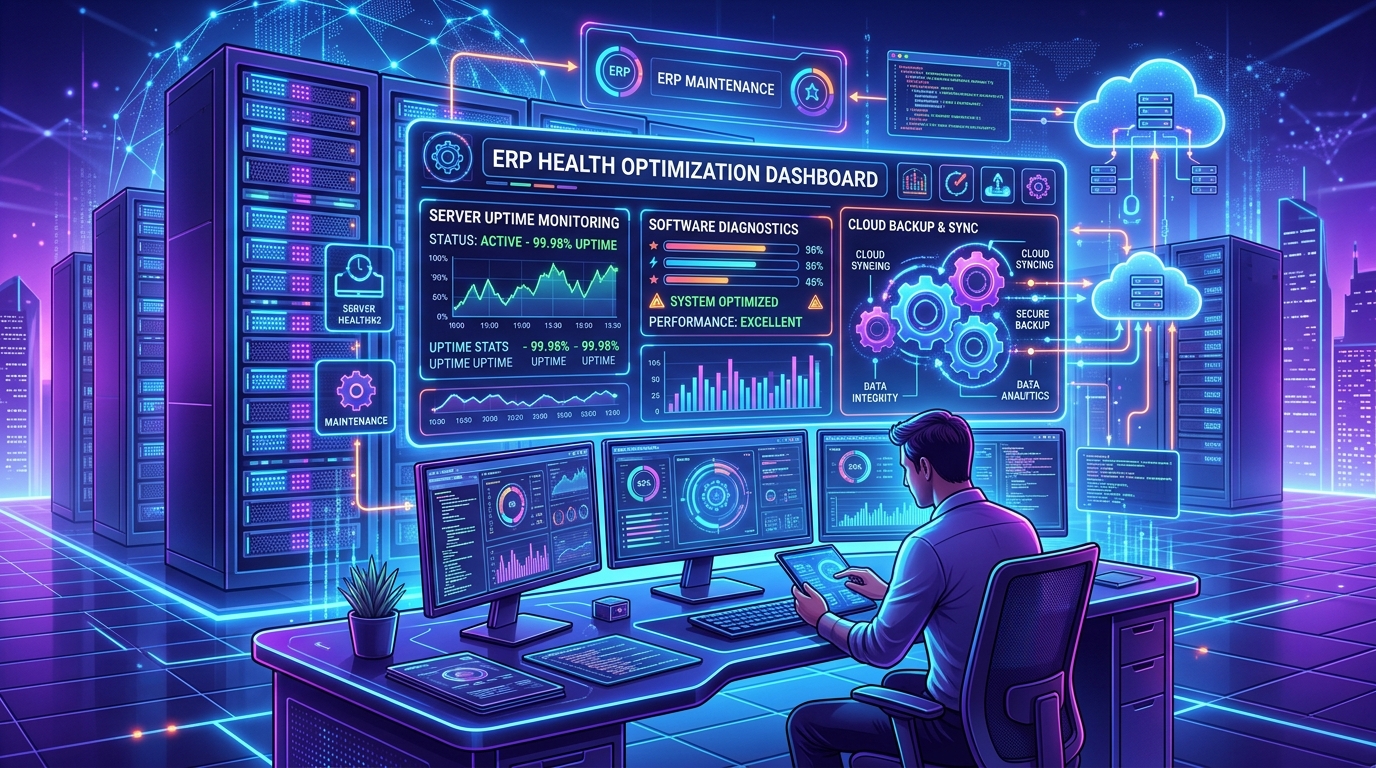
Understanding ERP Maintenance
Enterprise Resource Planning (ERP) systems are the backbone of many businesses, integrating core processes such as finance, supply chain management, human resources, and customer relations. To ensure these systems function efficiently and securely, regular maintenance is essential.
Key Best Practices for ERP Maintenance
1. Regular Software Updates
Keeping your ERP system updated with the latest patches and security updates prevents vulnerabilities and ensures optimal performance.
2. Data Backup and Recovery
Regularly backing up ERP data protects against data loss and ensures quick recovery in case of system failures or cyber threats.
3. Performance Monitoring
Continuous monitoring of system performance helps identify inefficiencies and optimize ERP functionality.
4. Security Audits
Conducting frequent security audits helps detect and mitigate potential threats, ensuring data protection and compliance.
5. User Training and Support
Providing employees with regular training on ERP usage and best practices enhances productivity and reduces human errors.
6. Customization Management
Avoid excessive customizations that can complicate upgrades and increase maintenance costs. Standardizing processes ensures long-term efficiency.
7. Vendor Support and Consultation
Maintaining active support agreements with ERP vendors ensures access to expert guidance and timely issue resolution.
Conclusion
Effective ERP maintenance is crucial for sustaining business operations, ensuring data integrity, and maximizing system performance. By implementing these best practices, organizations can enhance security, efficiency, and long-term scalability of their ERP systems.