

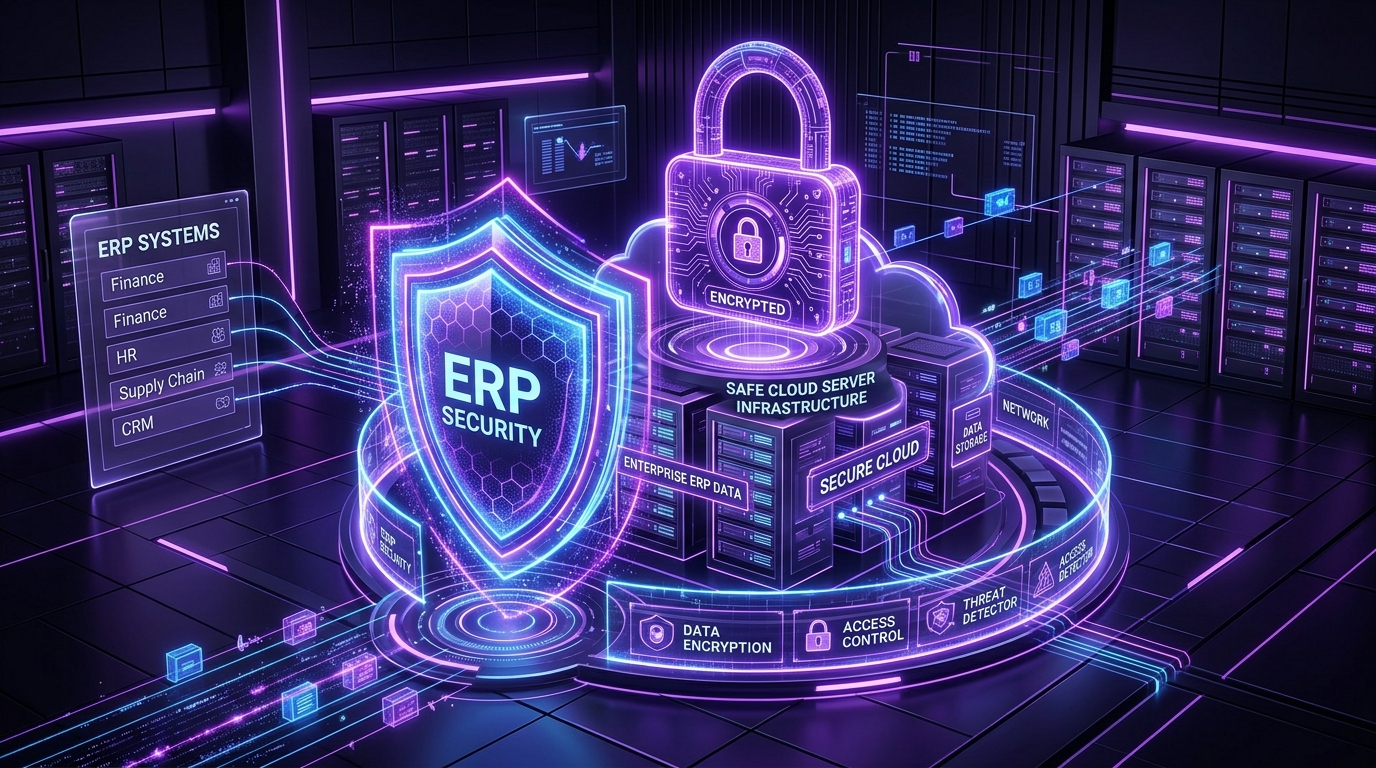
Understanding ERP Security
Enterprise Resource Planning (ERP) solutions are integral to modern businesses, streamlining operations by integrating various processes such as finance, human resources, supply chain management, and customer relations. However, as these systems store vast amounts of sensitive data, ensuring ERP security is paramount.
ERP security refers to the measures and strategies employed to protect an ERP system from unauthorized access, cyber threats, data breaches, and internal fraud. A robust ERP security framework safeguards not only critical business data but also ensures compliance with industry regulations and enhances operational efficiency.
Why is ERP Security Critical?
1. Protection of Sensitive Data
ERP systems handle vast volumes of confidential data, including financial records, employee details, customer information, and intellectual property. A security breach can lead to data theft, identity fraud, or competitive disadvantages.
2. Prevention of Cyber Threats
Hackers and cybercriminals continuously target enterprise systems due to the value of the stored data. Without proper security protocols, ERP systems become vulnerable to malware, ransomware, and phishing attacks.
3. Compliance and Legal Requirements
Regulatory frameworks such as GDPR, HIPAA, and SOX impose strict data security and privacy regulations. Non-compliance due to security breaches can result in hefty fines and legal consequences.
4. Business Continuity and Risk Mitigation
A compromised ERP system can disrupt business operations, causing downtime, financial loss, and reputational damage. Security measures ensure system availability and reliability, reducing operational risks.
5. Insider Threat Protection
While external cyber threats are a concern, insider threats pose an equally significant risk. Employees, vendors, or contractors with unauthorized access can misuse or leak sensitive data. Strong authentication, access controls, and monitoring systems help mitigate such risks.
Key Components of ERP Security
- User Authentication and Access Control – Implementing multi-factor authentication (MFA) and role-based access control (RBAC) ensures only authorized users can access critical information.
- Data Encryption – Encrypting data at rest and in transit protects it from unauthorized access or interception.
- Regular Security Audits – Conducting periodic security assessments helps identify vulnerabilities and address them proactively.
- Patch Management – Keeping ERP software updated with security patches mitigates the risk of exploiting known vulnerabilities.
- Backup and Disaster Recovery Plans – Regular data backups and a well-defined recovery plan ensure minimal downtime during security incidents.
- User Training and Awareness – Educating employees about cybersecurity threats and safe usage practices reduces human errors that lead to breaches.
Conclusion
ERP security is not an option but a necessity for businesses relying on ERP solutions. By implementing strong security practices, organizations can safeguard their operations, protect sensitive data, ensure regulatory compliance, and maintain customer trust. Investing in ERP security today can prevent costly disruptions and breaches in the future.